 Merken
 My mother always said the best soups came from things people threw away. That ham bone sitting in my fridge after Christmas dinner seemed destined for the trash until she called with her philosophy on kitchen waste. Two hours later, my kitchen smelled like a country farmhouse—all smoky paprika and simmering broth—and I understood exactly what she meant. This soup became my answer to those gray winter afternoons when nothing else seemed to warm you from the inside out.
I made this for my neighbor last winter when she was recovering from surgery, and she cried when I brought it over—not because of the soup itself, but because someone had remembered she hated feeling helpless. Watching her sit on her porch with a bowl, color slowly returning to her face, taught me that feeding people isn't just about nutrition. It's about showing up when they need it.
Ingredients
- Leftover ham bone with some meat attached: This is where the magic happens; don't trim it too clean because those little bits of clinging meat dissolve into the broth and create depth you can't buy.
- 1 cup diced cooked ham: Optional but worth it if you want the soup to feel more substantial and less like you're stretching leftovers.
- 2 cups dried navy beans or great northern beans, rinsed and soaked overnight: The overnight soak isn't laziness—it actually helps them cook evenly and prevents that grainy texture that ruins everything.
- 1 large onion, finely chopped: Don't skip this or rush it; the sweetness that develops as it softens is the foundation for everything else.
- 2 carrots, diced and 2 celery stalks, diced: This holy trinity of vegetables is non-negotiable, though you can chop them however you like depending on your mood.
- 3 cloves garlic, minced: Fresh garlic matters here more than in almost any other recipe I make.
- 1 bay leaf: Don't forget to fish this out at the end, and yes, I learned this the embarrassing way.
- 1 ½ teaspoons smoked paprika: This is the soul of the soup; use real smoked paprika and not the regular kind or you'll miss the whole point.
- ½ teaspoon black pepper, ½ teaspoon dried thyme, and ½ teaspoon dried oregano: These work together to create a background hum of flavor that makes people wonder what your secret is.
- Salt to taste: Add it at the end because the broth already contains sodium and the ham contributes its own saltiness.
- 8 cups low-sodium chicken or vegetable broth: Use the kind without weird preservatives if you can find it; your palate will thank you.
- 1 tablespoon olive oil: Just enough to keep things from sticking without making the soup greasy.
Tired of Takeout? 🥡
Get 10 meals you can make faster than delivery arrives. Seriously.
One email. No spam. Unsubscribe anytime.
Instructions
- Prepare your beans with intention:
- Drain those beans you soaked overnight and give them a good rinse under cold water. This simple step removes the compounds that make beans difficult to digest, so you're not just cooking—you're being thoughtful about how this meal will sit in your stomach.
- Build flavor in the pot:
- Heat your olive oil over medium heat and add the onion, carrots, and celery—what the old cooks call the base. Let them soften for five to six minutes, stirring occasionally, until the onion turns translucent and the kitchen starts to smell like Sunday dinner.
- Wake up the spices:
- Stir in the garlic, smoked paprika, thyme, oregano, and black pepper, cooking for just one minute until everything becomes fragrant. You'll notice the smell changes immediately—that's when you know the heat has released the oils in the spices.
- Bring everything together:
- Add the ham bone, drained beans, bay leaf, and broth to the pot and bring it all to a boil. Once it's rolling, reduce the heat and let it simmer uncovered for an hour and a half to two hours, stirring occasionally, until the beans are completely tender and the broth has turned rich and golden-brown.
- Rescue the meat from the bone:
- Remove the ham bone and let it cool slightly—you don't need to burn your fingers here. Pick off any meat clinging to it and return those precious pieces to the soup, then discard the bone and fish out the bay leaf.
- Make it your own:
- If you want extra richness, this is when you add that optional diced cooked ham. Taste everything and adjust the salt and pepper; sometimes the broth is saltier than expected, so go easy at first.
- Serve with generosity:
- Ladle it into bowls while it's piping hot and consider adding a handful of fresh parsley or a small drizzle of good olive oil on top.
 Merken
 My daughter once asked why I made this soup when chicken noodle soup was faster, and I realized I'd never properly explained that this wasn't about speed or ease—it was about honoring the ham bone instead of throwing it away, about time spent simmering while I read in the kitchen, about the quiet satisfaction of turning scraps into something that fed us and our neighbors both. She gets it now.
The Secret Life of Smoked Paprika
I spent years using regular paprika because I didn't understand the difference, and then a cooking friend gave me a tiny jar of smoked paprika from a specialty store and everything clicked. The smoke comes from peppers that are literally dried over fires, and that flavor cannot be faked or hurried. Once you understand that this soup is built around that smoky note, you'll stop treating paprika like decoration and start treating it like the main character. Your guests will taste it and ask what makes your version different from every other bean soup they've had, and when you tell them it's just paprika, they won't believe you.
What Happens if You Mash the Beans
Sometimes I take a wooden spoon and mash some of the beans right there in the pot during the last fifteen minutes of cooking, and the soup transforms from brothly to creamy without any cream involved. The beans break down and thicken everything, creating this velvety texture that coats your mouth. It's a small move that completely changes the experience, and whether you do it depends on your mood that day—some days I want my soup thin and soupy, other days I want it thick enough to almost be stew.
Making It Through the Seasons
This is winter soup, full stop, though I've made it in every season when the occasion called for comfort. The recipe stays the same but the context changes—summer versions feel lighter somehow even though nothing is different, autumn versions seem richer, and spring versions taste like hope. You can also substitute a smoked turkey leg for the ham bone if you want something slightly less heavy, and the soup becomes more Mediterranean in spirit while keeping the same soul.
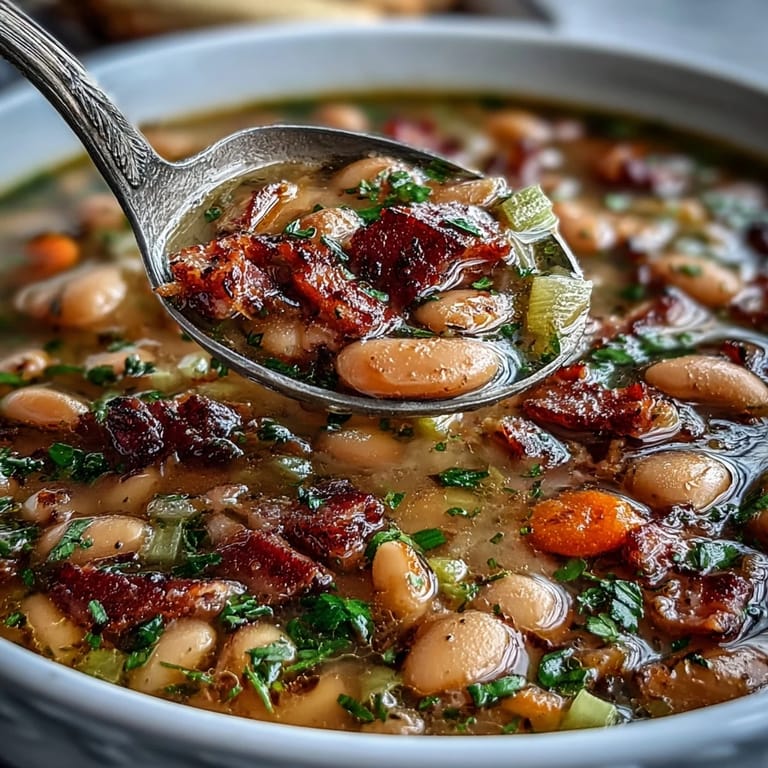
- Fresh parsley scattered on top at the end adds brightness without being pretentious.
- A side of crusty bread or cornbread is not optional—you need something to soak up the broth left at the bottom of the bowl.
- This soup actually tastes better the next day after the flavors have had time to get to know each other.
 Merken
 This soup taught me that cooking is really about problem-solving and generosity—how to use what you have, stretch a meal further, and make something beautiful from what others might throw away. I hope it becomes your version of the same thing.
Rezept-Fragen & Antworten
- → Wie lange sollten die Bohnen eingeweicht werden?
Die Bohnen sollten idealerweise über Nacht, mindestens 8 Stunden, eingeweicht werden, um die Garzeit zu verkürzen und die Bekömmlichkeit zu verbessern.
- → Kann man den Schinken durch eine andere Zutat ersetzen?
Ja, geräucherte Putenkeule eignet sich als alternative Fleischzutat für einen ähnlichen rauchigen Geschmack ohne Schweinefleisch.
- → Wie erzielt man eine cremigere Konsistenz?
Ein Teil der gekochten Bohnen kann vor dem Servieren leicht zerdrückt werden, um eine sämigere Textur zu erreichen.
- → Welche Beilage passt am besten zu dieser Speise?
Knuspriges Brot oder Maisbrot ergänzen die Suppe hervorragend und nehmen die würzigen Aromen gut auf.
- → Worauf sollte man bei der Brühe achten?
Es empfiehlt sich, eine natriumarme Hühner- oder Gemüsebrühe zu verwenden und die Zutaten auf eventuell enthaltenes Gluten zu prüfen.